
Everyone’s favorite mega-cap reported earnings on Wednesday after the bell.
NVIDIA news is usually good news for traders. And a major beat on earnings like we saw Wednesday should be great news.
Find break-out trades without the breaking news.
But on Thursday if you “auto-traded” the NVDIA earnings beat, expecting the usual spike from names like SNDK and MU, you would have gotten run over before lunch.

Nvidia simply can’t move the way it used to. 5 trillion dollar companies don’t make violent moves. And it’s why everyone turns to the more volatile names in the sector.
SanDisk Corporation (NASDAQ: SNDK) and Micron Technology, Inc. (NASDAQ: MU) are roughly where Nvidia was back in 2020.
They’re massive names, but they’re not so big that they can’t still run on momentum.
And all through this year’s chip run they’ve often traveled further on Nvidia’s catalysts than Nvidia had managed on its own.
So buying Micron or SanDisk into that print might have seemed like a smart trade. And for most of this year it’s been a safe bet.
Which is why Thursday’s tape must have really stung for a lot of you.
The report was enormous, the group gapped exactly like you hoped, but all three of those sympathy names printed the high of the day in the first bar and closed under their open.
It’s why you can’t trade earnings beats like a degen.
But there’s a responsible way to take advantage of these major market events…without ripping your face off.
Volume Is The Tell
When the sympathy move pays, the volume shows up after the open and keeps showing up.
The traders who missed the leader come hunting the next name in the group and they keep coming all session.
Thursday nothing came.
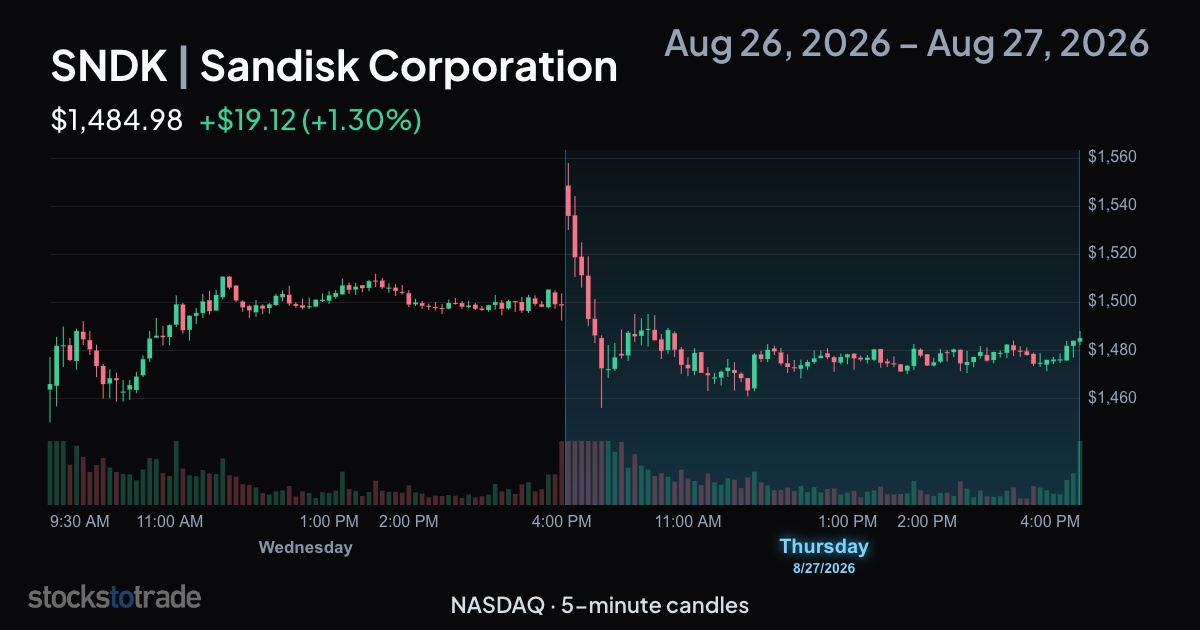
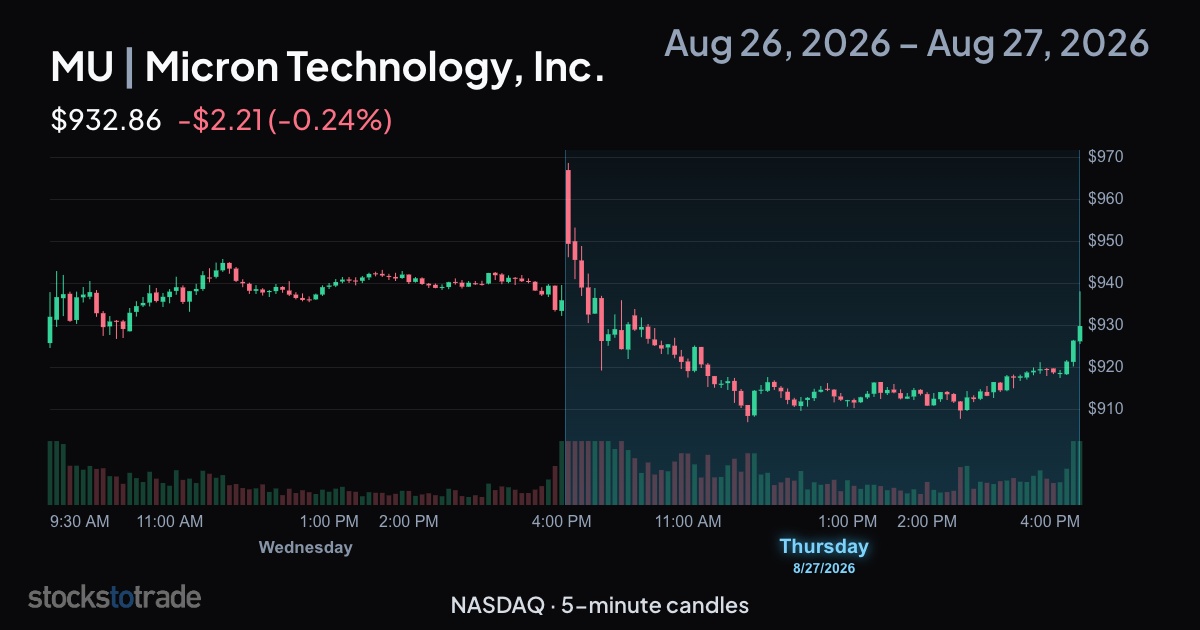
SanDisk gapped on only six-tenths of its normal volume. Micron on seven-tenths. STX was the only one that traded at normal volume (normal is not what we’re looking for either).
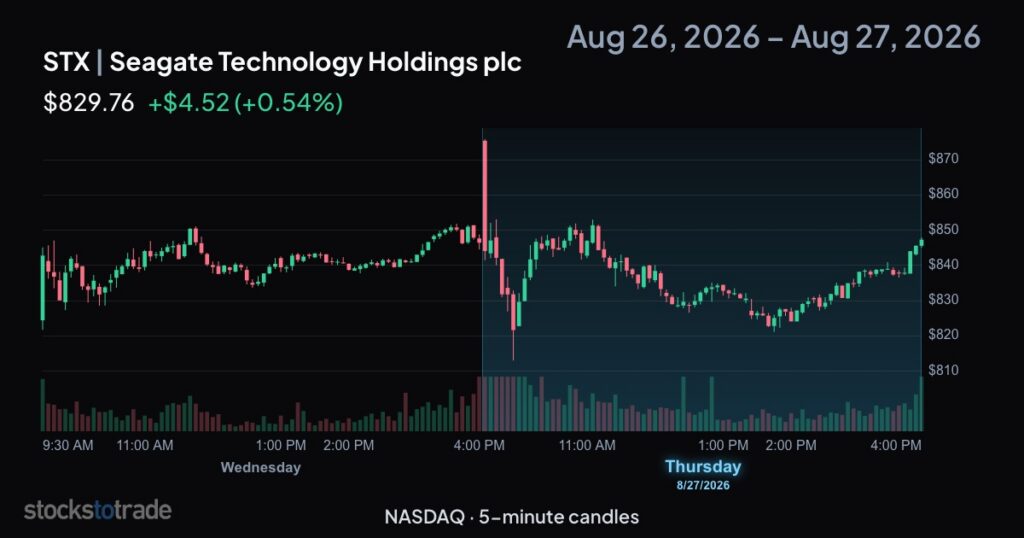
All 3 names printed the high of the day in the first bar, and all three closed under their open.
Nothing on the charts could have told you that at 9:01.
But looking back at it, the buying that traders were hoping for on Thursday morning had already happened days before the report.
Seagate had put on 6.5% in the two sessions in front of that gap. Micron 3.1%.
The smart money came in early and sold into the open on Thursday.
That’s obvious now…but there weren’t strong enough signals to know that for sure on Wednesday night.
Which means the sympathy play could have easily worked.
And it’s exactly why you never try to predict an earnings move.
Instead, wait and watch the volume before you do anything.
How I Trade Earnings
I’m waiting until I know the sellers are done.
Under VWAP (Volume Weighted Average Price) everybody who bought that gap is underwater, and they hit every bounce. So I leave it alone until it gets back above VWAP and stays there.
Then I want the volume building into the afternoon instead of drying up. A name that’s going to run in the back half doesn’t go quiet at lunch.
The trigger is the morning high. If it takes that out late in the day on rising volume, the buyers are real, and the low it put in after the open becomes my risk.
A price somebody actually defended is the only kind worth leaning on.
And if it never gets there, I don’t own it. If the high of the day is the 9:30 print, that was all the buying there was ever going to be, and there was nothing to catch in the first place.
These are the fundamentals that make you a better trader. If you don’t have these honed, you are operating with no safety net. Not a great idea.
Becoming a great trader is a process…you can start right here.
Stay Sharp,
Jack Kellogg
*Past performance does not indicate future results