

We’ve all watched this happen…
A stock rips on a story, a million traders get alerted, and everyone is licking their chops over buying this one ticker…
Then it stalls. It doesn’t break out.
Just like you at your desk, the price sits there…

The stock that just ripped is now doing nothing, and you’re starting to think the move is over.
But don’t scroll to the next ticker.
The chart is testing you. And your test results will tell you whether to abort the mission (or get locked in for a trade).
So what’s a passing grade?
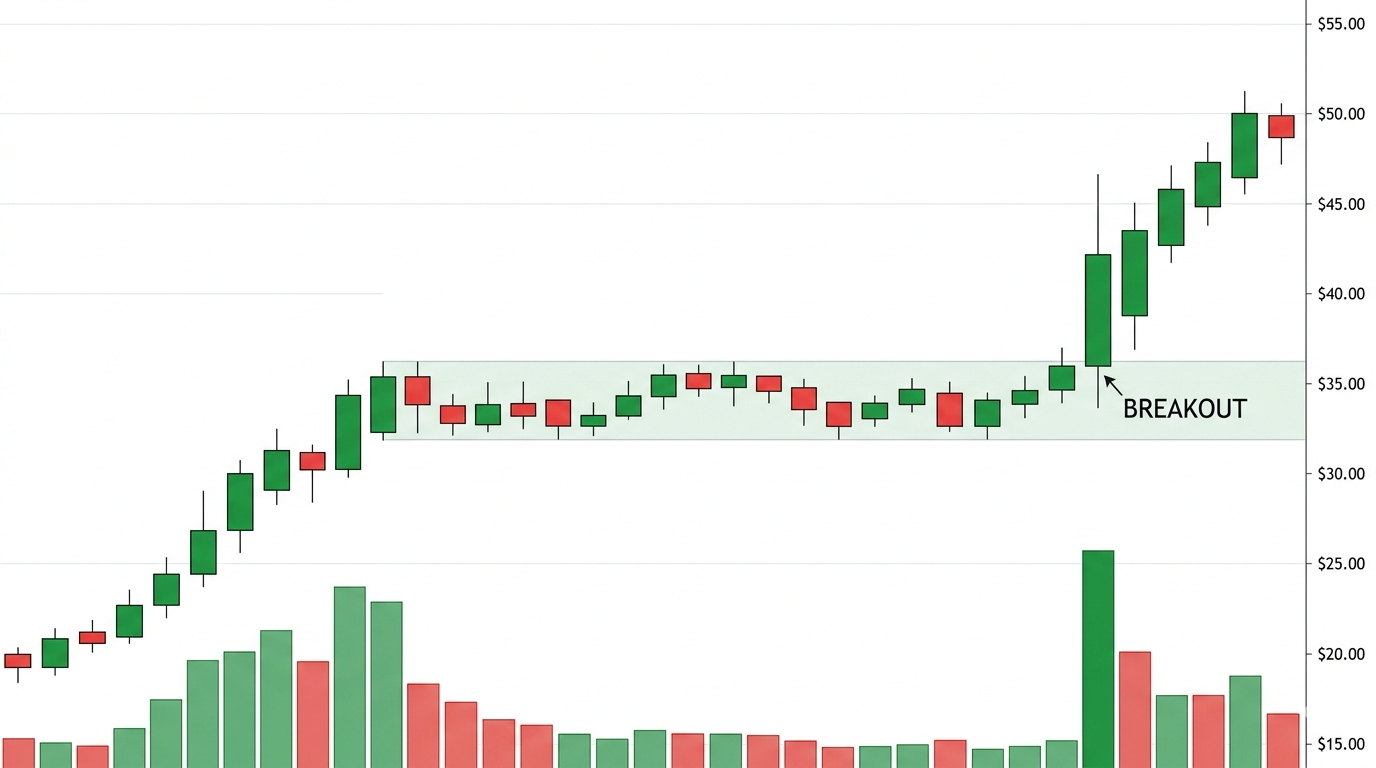
The volume is the tell. When buyers and sellers both step back at the same moment, the pause is structural. The late buyers are already in. The early buyers aren’t ready to dump. The stock holds because there’s nothing left to push it in either direction.
If the price doesn’t drop instantly with the volume, then it’s time to sit up in your chairs and start paying close attention.
2 Clear “Pause Setup” Examples
Here are two perfect examples.
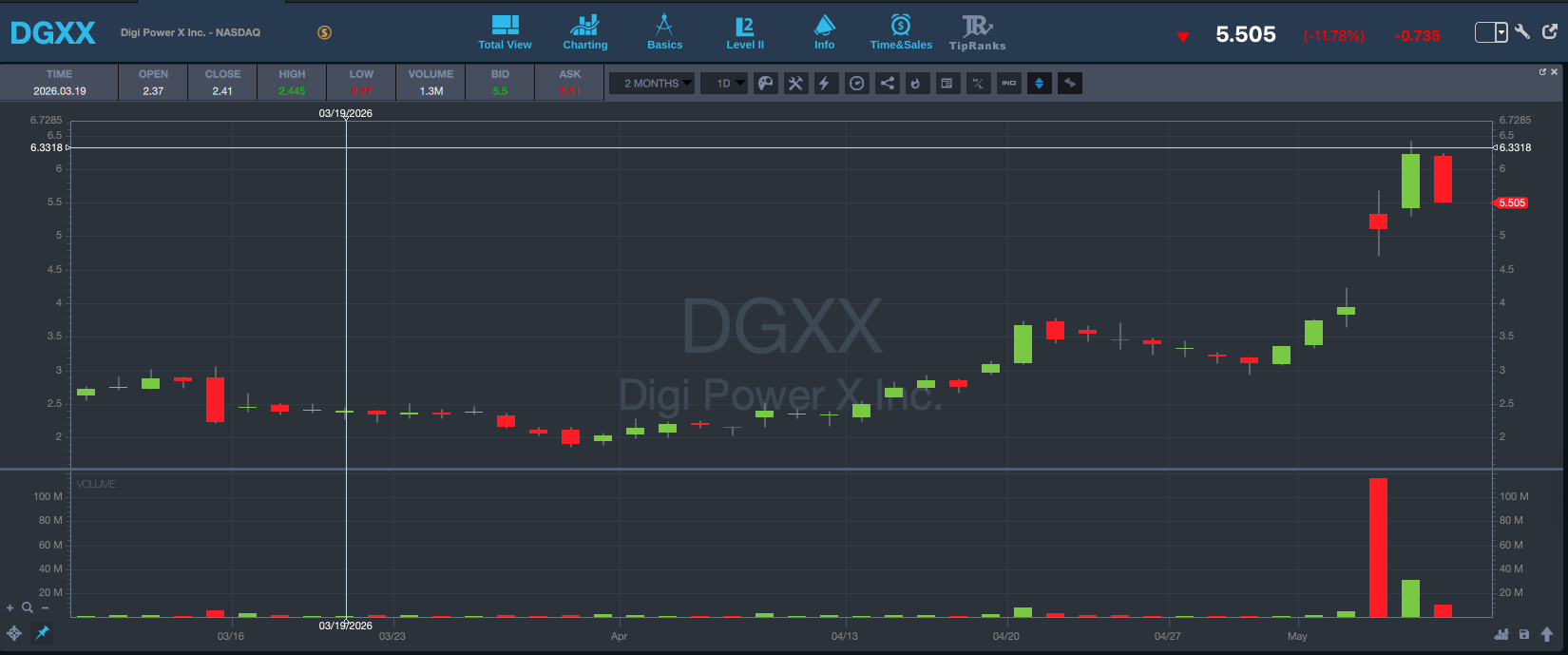
Digi Power X (NASDAQ: DGXX) is an AI infrastructure operator that recently pivoted from Bitcoin mining. The stock was trading in the low $2s in early April. Then it ran.
It hit $3.50 on April 20 after a GPU rental deal, paused for ten sessions in a $3.20-3.70 range with volume drying up, then gapped to over $5 on May 5 when the company announced a $2.5 billion deal with Cerebras.
Now DGXX is consolidating in the $5-6 area. The volume is contracting and the structure is being tested.
Now look at one that already played out…
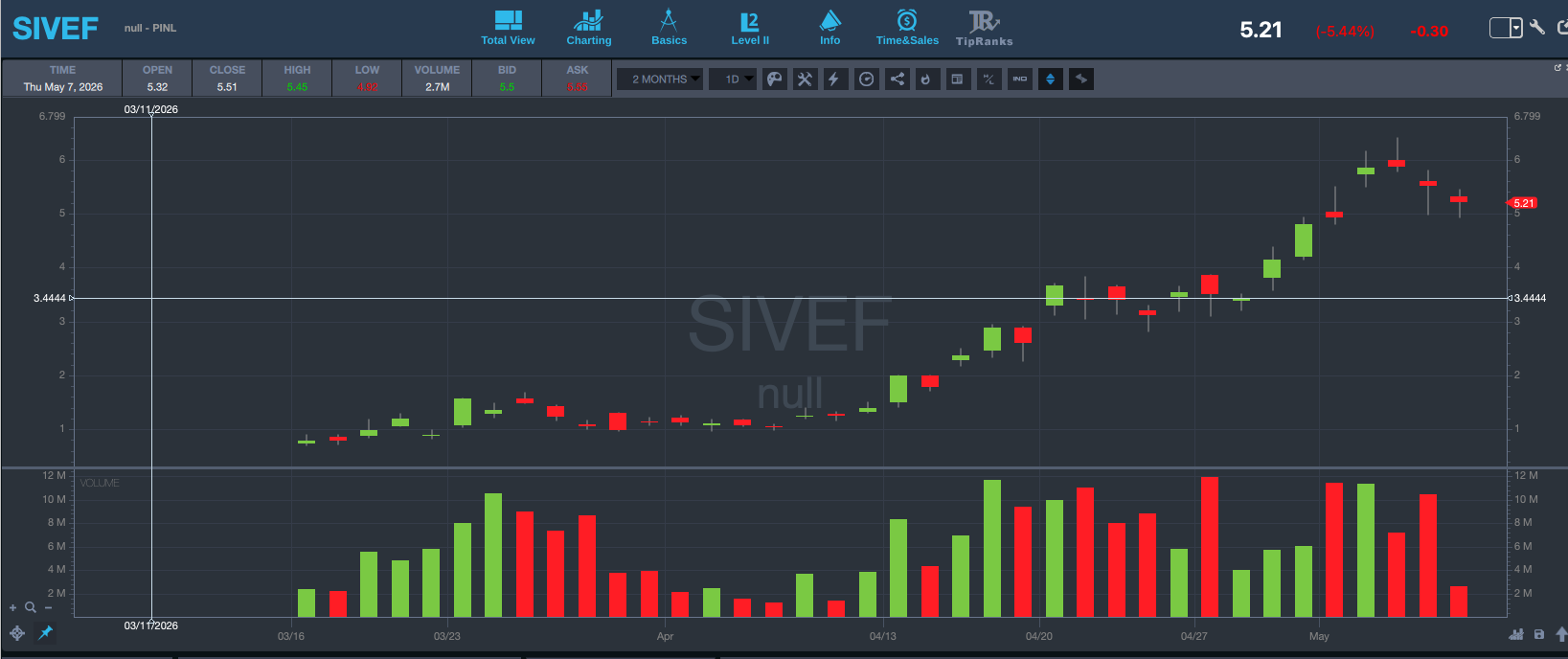
Sivers Semiconductors (OTC: SIVEF) did the same thing on a different scale. The story is AI photonics (semiconductors that move data through fiber for AI infrastructure).
The stock was around $1 in mid-March. By mid-April, $1.80. Then $3.00 by April 20. Then $5+ by early May. Each leg paused for a few sessions, volume dried up, then SIVEF ran again. Three times in seven weeks.
You blow it in the same place every time.
You show up after the first leg. You see the move on the screen, get excited, and buy the top. Then the consolidation hits and you panic-sell at the bottom of it. You hit the bid at the lowest tick. By the time the stock breaks out for the second leg, you’re already gone.
I don’t want that to happen to you: See how I nailed 1-day surges of 75%, 198%, 225%.*
How I Trade The Pause Setup
- Wait for the first surge to finish.
- Watch volume on the pullback. Contracting volume with price holding the range means the structure is holding. If volume stays heavy and price keeps falling, sellers are still in control.
- Enter on the breakout from the consolidation with volume confirming. Set your stop just below the entry candle.
Once you are in, the position barely moves. You’re up a few cents, then back to even, then a few cents in the red. The bar holds the range and the volume stays low. The setup pays you in time first. Price comes later.
The consolidation can drag on for hours. But every minute it sits there, the next bid is closer.
At that point, I don’t touch the position.
I sit on my hands and wait for the breakout.
Stay patient,
Jack Kellogg
*Past performance does not indicate future results