
Something huge just happened…
I don’t think most people fully understand what it means yet.
When I was coming up, grinding through my first year with $7,500 saved from valet tips, trying to figure out this game from my mom’s basement, there was something specific that made everything harder than it needed to be.
It shaped how I traded. It shaped how every small-account trader I know trades. It put a ceiling on what was possible before you even had a chance to prove yourself.
But it’s all changing…
And the ripple effects will be felt across every corner of the market.
I hope you’re ready.
What Just Happened
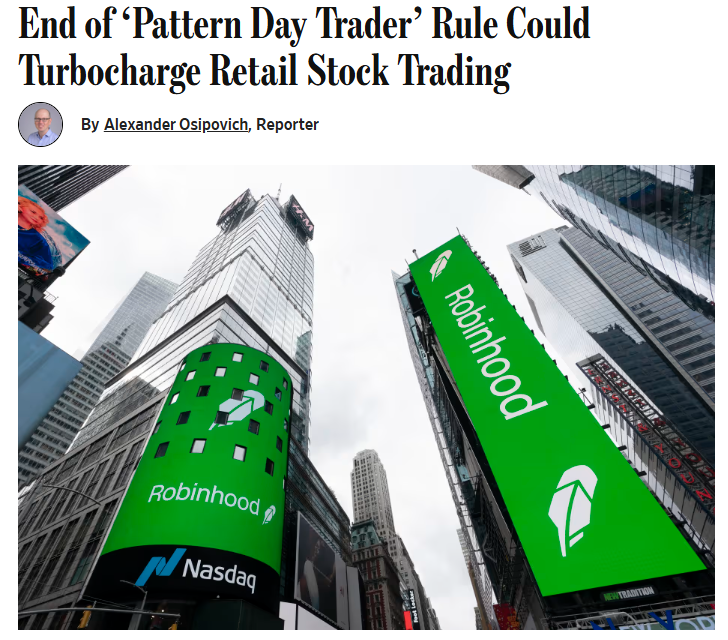
The SEC just announced the elimination of the Pattern Day Trader rule, known as the PDT rule. It officially goes into effect on June 4th.
If you’ve been around trading for any length of time, you know exactly what that means. If you’re newer, let me break it down.
The PDT rule was put in place back in 2001, in the aftermath of the dot-com crash.
Regulators were spooked by the losses retail traders had taken during that era and put a rule in place to slow down the smallest players in the market.
The rule required any investor who made four or more day trades within five business days to maintain a minimum of $25,000 in their margin account at all times.
That $25,000 threshold has been in place for over two decades, acting as a barrier between small account traders and the full freedom to trade the way they want.
If you dropped below $25,000, you were locked out of day trading until you topped your account back up.
It didn’t matter how good your setups were. It didn’t matter how disciplined you were. The rule didn’t care about any of that.
It only cared about your balance.
Why This Matters So Much To Me
I’ve traded under this rule for years…
When I was building my account from $7,500, the PDT rule was a constant presence in my decision-making.
I had to be selective, not just because selectivity is good trading, but because I was forced to be. The rule made certain strategies impossible and certain opportunities completely off limits.
I watched traders with bigger accounts move freely while I had to manage my limited day trades like a precious resource. That wasn’t fun.
And it wasn’t just me. Every trader who came up through Tim Sykes’ Challenge, every student starting with a small account, every person trying to build something from nothing, they all felt the weight of that $25,000 requirement pressing down on what they could do.
Now that pressure is gone.
FINRA, Wall Street’s self-regulator, proposed ending the rule back in December, saying the move would give investors more freedom to participate in the markets.
Last week, the SEC granted approval, replacing the rigid $25,000 minimum with a more flexible system in which trading activity determines required equity levels rather than a hard-dollar threshold.
Robinhood (NASDAQ: HOOD) and Webull (NASDAQ: BULL) both jumped more than 10% on the announcement. That tells you everything about how significant this change is for the retail trading world.
What This Means For You
If you’ve been trading with a small account, grinding through the PDT restrictions, making every day trade count because you had no choice, your world just got a whole lot bigger.
June 4th changes the game in a way that hasn’t happened in over two decades.
You’ll be able to day trade more freely. You’ll be able to react to the market as it happens without counting trades in the back of your head. You’ll be able to take the setup when it’s there instead of holding back because you’ve already used your allotted trades for the week.
That freedom is real. And it’s a big deal.
But listen carefully…
Freedom without discipline is dangerous.
The PDT rule forced small account traders to be choosy. To wait for the right setup. To think twice before pulling the trigger because every day trade counted. That kept a lot of people out of a lot of bad trades.
Now that the guardrail is gone, the discipline has to come from you.
Study the patterns. Size appropriately. Cut losses fast. Know your setups before you enter.
The opportunity in front of you right now is bigger than it’s ever been in my trading lifetime.
Make sure you’re ready for it.
– Jack Kellogg