Have you ever bought a stock and wished you bought more?
Adding to your position can be tricky when a stock is still running.
But that’s when it’s the most tempting to buy more…
It gapped up, it’s green, and everybody watching can see it working. Buying more right there feels like backing your own judgment.
The problem is what that does to your average price.
Let’s say you buy 100 shares at $10.00 and the stock runs to $12.00.
You’re up 20%, so you buy another 100 shares at $12.00. Now your average price for your position is $11.00.
If the stock pulls back to $11.00, your whole position is at break-even. A drop of about 8% wiped out the gain you had before you added.
So one add in the wrong spot can undo a good start.
The traders buying alongside you on a run make it worse. They’re chasing, and they’re paying the highest prices of the move. They don’t want the stock to go down at all. When it does dip, a lot of them don’t wait around.
They panic sell and the price plummets. And you just bought more!
There’s also nothing underneath (no buying support) to lean on. When a stock gaps well above its breakout, the nearest support level is a long way down. Any shares you add up there are a bet that the stock keeps going.
So a big gap up is the hardest day for me to add.
Hewlett Packard Enterprise Company (NYSE: HPE) has one of the most interesting charts on my watchlist.
I already hold a half-size position from around $62.00. HPE has been stuck under resistance for a while. If it finally breaks through, I want to own more of it.
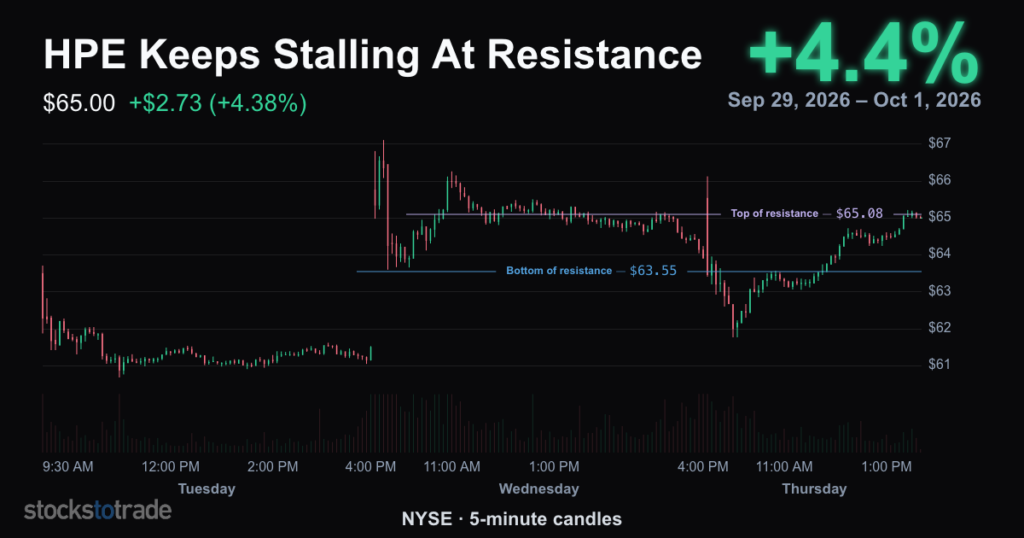
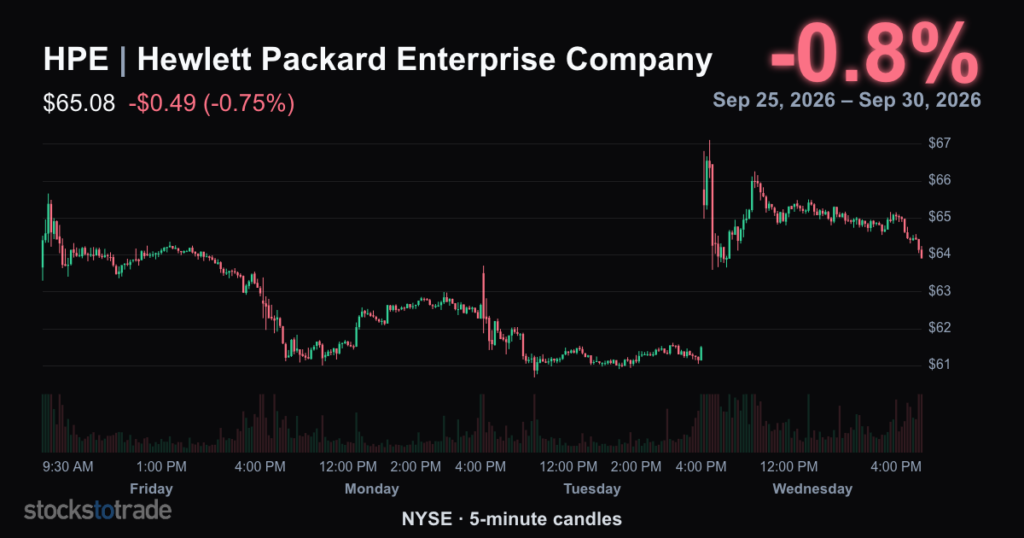
HPE has resistance between $64.00 and $65.00. It’s pushed up into that area more than once in the last couple of weeks, and every spike has been met with selling.
My stop on the position is around $60.00, about 3% under where I bought. If HPE falls to that level, I sell the whole position.
I only add if HPE breaks through resistance and buyers defend the move. I want to see the stock trade sideways above $65.00 and set a higher low. I also want steady buying volume while it does.
If HPE spikes through $65.00 and falls right back under it, I don’t add. Anyone who buys more on that spike is buying near the top of a move that didn’t hold.
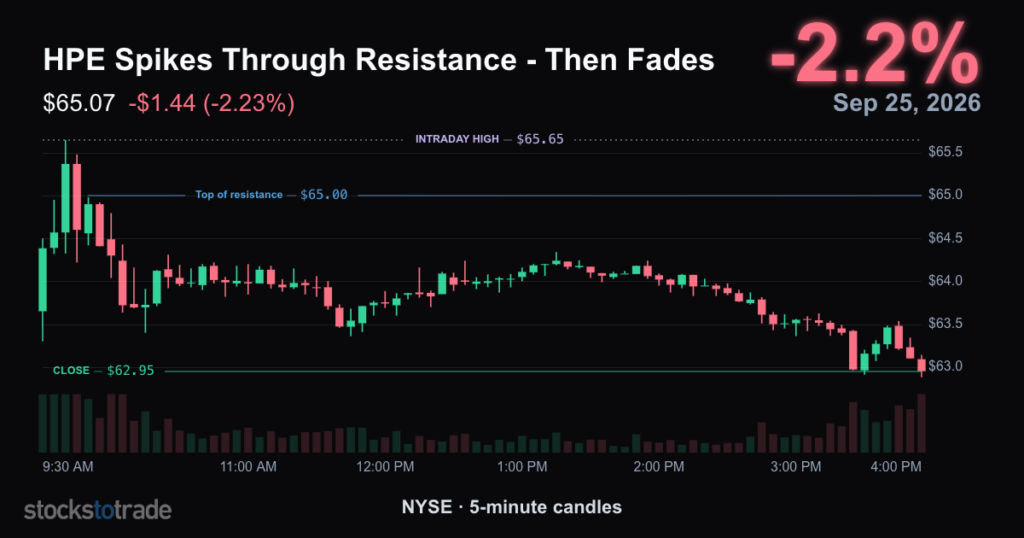
On Friday, September 25, HPE got as high as $65.65 and closed at $62.94. It spiked through resistance and didn’t hold, so it wasn’t an add for me.
On Tuesday, September 29, HPE never got above $63.70. From there it sold off almost 5% to $60.68, close to my risk. It closed at $61.49.
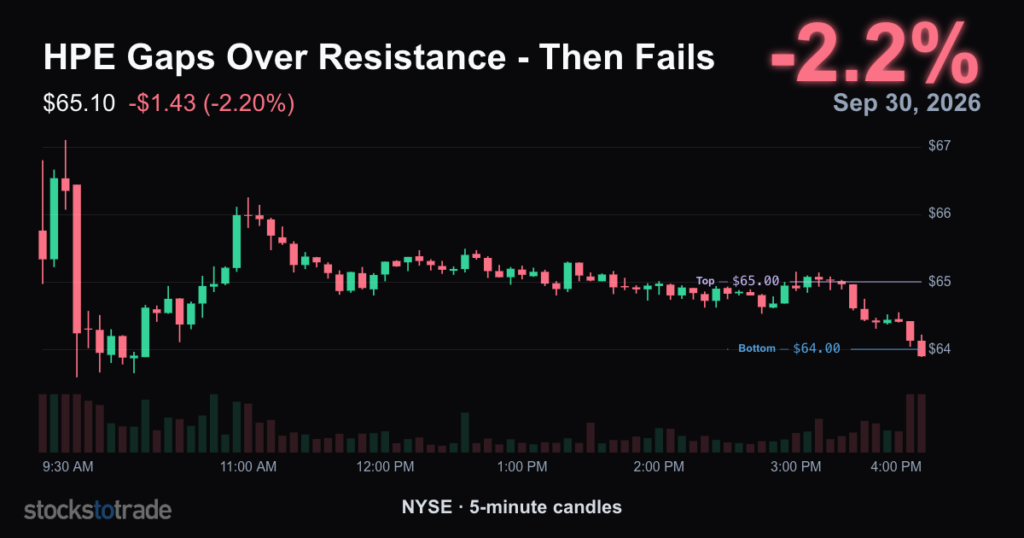
On Wednesday, September 30, HPE gapped over the whole resistance area and opened at $65.76. That open was almost 7% above Tuesday’s close. Volume that day was about 1.4x the stock’s 30-day average.
On a lot of screens, it looked like the breakout everybody had been waiting for.
It lasted about 20 minutes. HPE hit $67.10 in the 9:40 AM ET bar. In the next bar it dropped to $63.59, under the bottom of resistance. It closed the day at $63.89.
Anyone who added at the open was down about 2.8% by the close.
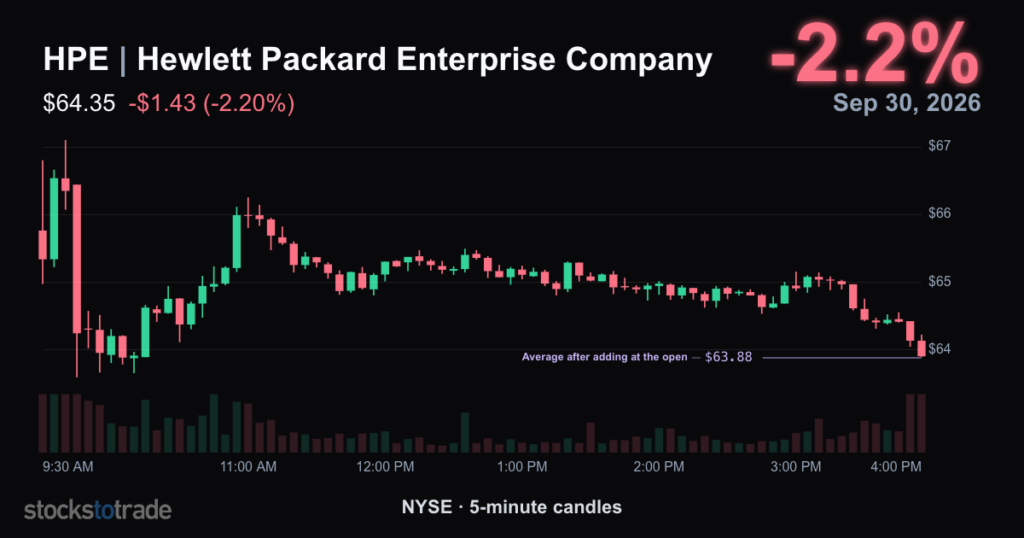
If I’d doubled my position at the $65.76 open, my average price would have been about $63.88. HPE closed at $63.89. One add would have taken a position that was up about 3% and left it at break even in a single day.
My plan was built to skip exactly that spike. As of Wednesday’s close, HPE still hasn’t held above $65.00, so I’m still waiting to add.
My trades are posted on Profit.ly, so a lot of people see which stocks I’m in and buy the same names.
Copying a ticker is easy. But simply reading a list of my trades won’t show you how and when I add to winning positions.
Getting that part right has done more for my account than picking the best names.
You can use the same approach on your next green trade. Before the stock runs, decide where you’d add and what the stock has to do first. For me, that’s a break through resistance and then a hold above it with a higher low.
If the stock gaps over your level at the open, let the open go. Wait for it to show you it can hold up there before you buy more.
Sign up for Trade Signals today.
Till next time,
Jack Kellogg
*Past performance does not indicate future results