

A year ago, I told you exactly where the money would go once the pattern day trading rule (the dumbest rule ever made) finally dies.
Well, yesterday marked the end of the PDT Rule, and the money’s already moving exactly where I said it would. Cheap names with low float, and they’re paying out already.
One cheap stock made me over $16,000.*
Now that the rule’s dead, brokers will spend the next 18 months lifting the restrictions on day traders, wave after wave. These setups are only going to get crazier.

Cheap stocks are about to be the most overcrowded corner of the market, packed with traders who have no idea what they’re doing. Make sure you’re one of the ones who does.
Go chasing every one of these runners and you will get smoked. But if you know how to play this game the right way, you can start printing money on these cheap stocks every week.
As the post-PDT era begins, the traders who come in with a plan are going to eat. The ones who walk in with their pants around their ankles are going to pay dearly.
These 3 rules have earned me massive gains…
3 Rules for Cheap Stocks
Before I put a dollar into one of these names, three things have to show up: volatility, a familiar pattern, and significant volume.
First, the stock has to be already moving with big ranges. These cheap names sit dead for months at a time, and you don’t want to be early money. You only want them when they’re ripping.
Next, I’m looking at the chart for familiar patterns. Have I seen this pattern before? If it’s a shape I’ve seen a thousand times, I’m going to be a lot more confident stepping in with size.
Nothing’s guaranteed, but at least I’ve got something to compare it to. If I’m seeing it for the first time, I’m not learning it with real money on the line.
Then the last thing I check before I ever lock in a trade: Are there enough shares changing hands for me to get in AND get out with size?
If one of the three is missing, I pass. And I don’t lose sleep if the stock runs without me.
After all, there are plenty more trades out there. Tim Sykes thinks this month is the single greatest supernova window of his entire 25-year career.
So when all three conditions are met, I move in with size.
And that’s exactly what happened this week…
The HUBC Trade
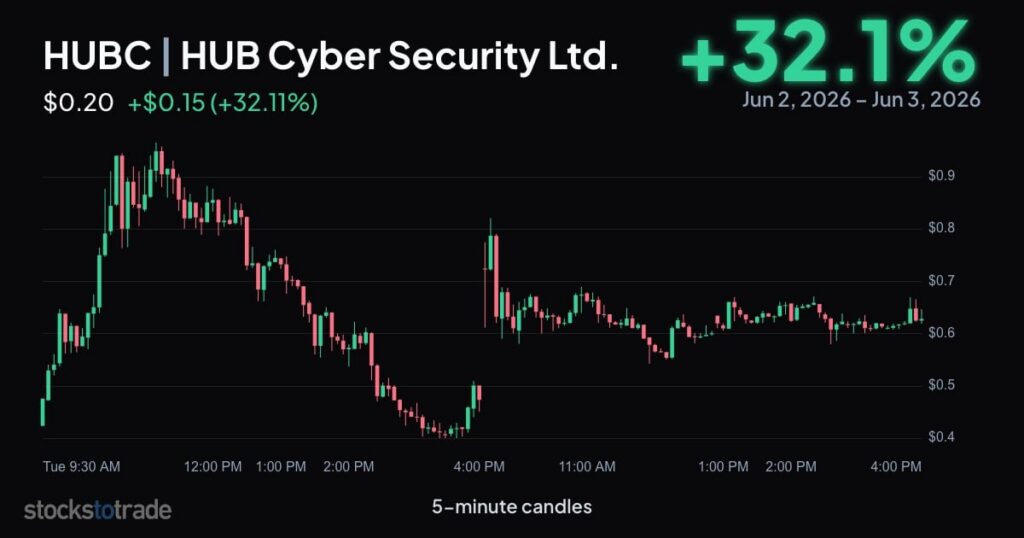
HUBC was sitting around fifty cents and checking every box:
- already running
- a chart I’ve traded a hundred times
- volume deep enough to take real size
The stock moved about two cents. I made over $16,000 overnight.*
Obviously, making gains like that on a 2-cent move requires a big position. But you can scale it however you want, the math holds.
A two-cent move on a fifty-cent stock is almost 5%, and 5% is 5% whether you’re working with five hundred bucks or five hundred thousand.
And these setups repeat every week. That’s exactly why you need the rules. If you’re trading these setups weekly without them, you will eventually get run over.
With them, you don’t need a home run. A 5% base hit, week after week, is how you stack gains and make serious gains in this market.
Cutting a Loser Quickly
You’re not going to win every trade. If you did, you wouldn’t need the rules.
I took a big position on CRML, and I took a big loss … but it could have been a LOT worse.
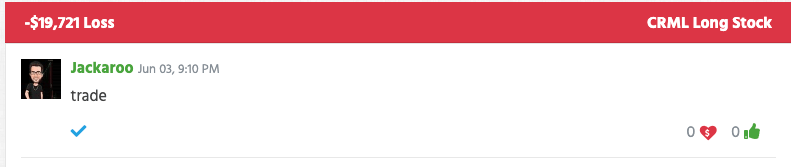
When you’re trading with this kind of size, you have to cut fast and move on to the next setup. If you are super disciplined about this, you can stack your gains and avoid the big wipeout losses.
You can follow the 3 rules to help you choose better setups. But that doesn’t mean every setup is a winner.
The rules only work if you’re disciplined about getting out fast when things are going south on a trade.
Stay ruthless about that, protect your gains from the big wipeouts.
Waiting for the three confirmations, plus cutting your losers fast: that’s the playbook for the next 18 months.
Learn these three rules now, you’ll thank me later.
Stay ready,
Jack Kellogg
*Past performance does not indicate future results